Growing up, but not willing to walk. How to improve the children’s twisting and hugging habits?

Growing up, but not willing to walk. How to improve the children's twisting and hugging habits?

Source: Psychotherapist, Lee Wai Tong

At the age of one, children gradually learn to walk. At first, children will be very excited to explore everywhere. But gradually, they will ask adults to hold them and not be willing to walk by themselves. Parents will be feeling headaches, sometimes the child may be really tired, and sometimes they just want to be held out of a sense of affection. What can parents do when their children ask for a hug?

Some parents have mentioned to me that their children couldn’t walk when they were one year old, but they wanted to walk very much. When they learn to walk later, they especially like to walk at that time. The parents were happy that the stroller could be left at home, thinking that the child would walk in the future. However, after the children became familiar with walking, they would want to be held by their parents, and even the parents would need to take a stroller and go everywhere in the stroller.

If you don’t have a stroller, it’s a big test of the parents’ physical strength. Of course, parents want their children to walk again, and some parents say, “If you don’t walk, we won’t go out.” Parents actually want to go out with their children, have fun, and walk around, so why not set a goal with them? For example, if you go there, you will hold them, and if you go there, you will walk, and you will make this commitment before you go out. For example, when the child is just out of the lift door and says he wants to be held, we have just said that we have to go downstairs, from the entrance of the estate down to the gate, before we can hold him. We have a goal for the child; the child moves naturally downstairs to hug, and the parents promised to carry him to the gate and place the child back on the ground. 

Sometimes children would suddenly say they wanted to be hugged; parents could tell their children to walk to the other side of the light before hugging. On the one hand, we all enjoy parent-child fun, and secondly, children have a goal, know where to walk to hug, and are naturally more willing to walk a little more. Sometimes children are really tired, or the feeling of hugging is actually very intimate, so they want to hug to get the intimate feeling. So we need to let the children know that we will hug them, but there is a goal, for example, to walk there and hug them at that time, so that everyone will be happy.

Siblings often quarrel with each other and the role of parents is especially important.

Siblings often quarrel with each other and the role of parents is especially important.

Written by : Founder of Family Dynamics

        Marriage and Family Therapist 

        Children Play Therapist           

        Ng Yee Kam


In recent play therapy cases, several of the children’s emotional problems were related to their young siblings’ relationship. Most of these problems were not caused by major arguments, but rather by subtle interactions in which each child was seeking the mother’s attention, comparing how much positive feedback they received from each other, and comparing who the mother “loved” more! Children often fight with each other because they are jealous of their siblings and take the opportunity to vent their frustrations.

It is true that everyone is “biased” and so are parents. Both inborn and nurtured personalities can lead to a preference for certain behaviors and behavioral patterns. If parents do not think about this, they will not suddenly become more open-minded because their children are their own.

Parents may be more appreciative of certain traits and more resistant to certain traits in their children’s different personalities. This is understandable. The problem is that parents must be aware of this situation and be aware of it and allow themselves to grow beyond the narrow framework of their parental role, increase the breadth and width of their own vision, learn to appreciate the differences in their children’s personalities, and appreciate their children’s unique strengths from the bottom of their hearts, and pass them on in their daily lives so that their children can receive them and affirm themselves. This will prevent the problem of sibling rivalry from worsening and causing unnecessary jealousy and suspicion in children.

The mother’s role is especially important during the early years of a child’s life because the quality of the mother’s interaction with the child has a critical impact on the child’s self-worth and sense of security. In these recent cases, it was not uncommon to find that the children had a sibling in the family who was cheerful, understanding, and liked to express herself, and was well liked by adults and teachers. I could see the mother’s joy and pride when describing her child. No wonder the children in these cases often felt compared to the others because they were more introverted, reticent, shy and cautious.

One mother was aware of the need to appreciate her son’s abilities, so she kept praising him, but in terms of character, she inadvertently encouraged her son to follow her sister’s example by expressing himself more and integrating into the group. However, this is not the nature of the child’s character and makes the child suspect that there must be something wrong with his or her character that cannot be accepted by the mother. This internal pain can easily turn into jealous emotions towards the elder sister, making the parents feel that the child’s attitude towards his/her sister is unreasonable, and further preventing the child from breaking out of this negative cycle.


I suggest that parents should not compare their children. For children who are more introverted, shy, reticent and cautious, they should be more reassuring: “ You do not need to force yourself to play with children like your brother, you quietly observe is already a kind of participation, when you feel at ease then go out to play is not too late. Or, “Not every child needs to be as talkative as their elder sister or like to perform in front of people; Mom likes it when you can express yourself as you see fit. “

For children who are more reactive and impulsive, listen to them first and then help them correct their behavior if it is safe to do so: “You are reacting so strongly to hit your brother, you must feel very angry inside, let me hear how you feel, okay? Sometimes parents do have to deal with their children “fighting for something,” but more often than not, what parents need to do is to meet their children’s psychological and emotional needs and affirm their true nature, so that their children can naturally get along well.  

Before becoming enraged at their children, parents should ask themselves these three questions

Before becoming enraged at their children, parents should ask themselves these three questions

Written by: Caritas Rehabilitation Services,Clinical Psychologist, Yu Kwok Ting

Some parents may be more impulsive and even have a habit of blaming their children for  problems such as disobedience, deliberate anger, or naughtiness. When children fail to do  what they want, they become angry with their parents, but this will gradually alienate them from their parents, which will damage the parent-child relationship in the long run.

Parents’ personalities, families of origin, and parenting methods learned in different ways  will affect parent-child relationships. And the adults’ thoughts will influence their mood. If adults find themselves in frequent conflicts with children, which affect the parent-child      relationship, we can ask ourselves three questions.

          1. Whether there are other possibilities

If a child is not able to do all the homework required by his or her parents, the first thing   the parents think is that the child is just having fun and not doing homework, but the real    reason may be that they do not know how to do it and need parental guidance. If parents    take preconceived notions as facts, they may ignore the needs and difficulties of their children and damage the parent-child relationship

  1. Whether one’s own thoughts have been confirmed

Some parents often say that their child is “deliberately annoyed” and then see their child’s  behavior as disobedience, but perhaps the reason for the child’s behavior is carelessness,    but the parents are influenced by their subjective feelings and misunderstand their child.


  1. Are your thoughts helpful to the goal?

If a parent’s goal is to mend the parent-child relationship, but he or she often holds the idea that the child is “deliberately working against him or her,” is this thinking really helpful to his or her goal? Parents can try to find more realistic and justifiable ideas to help them      achieve their goals.

Categories
Parents Zone Parents Zone Parents Zone Parents Zone Parents Zone Parents Zone Parents Zone Parents Zone Parents Zone

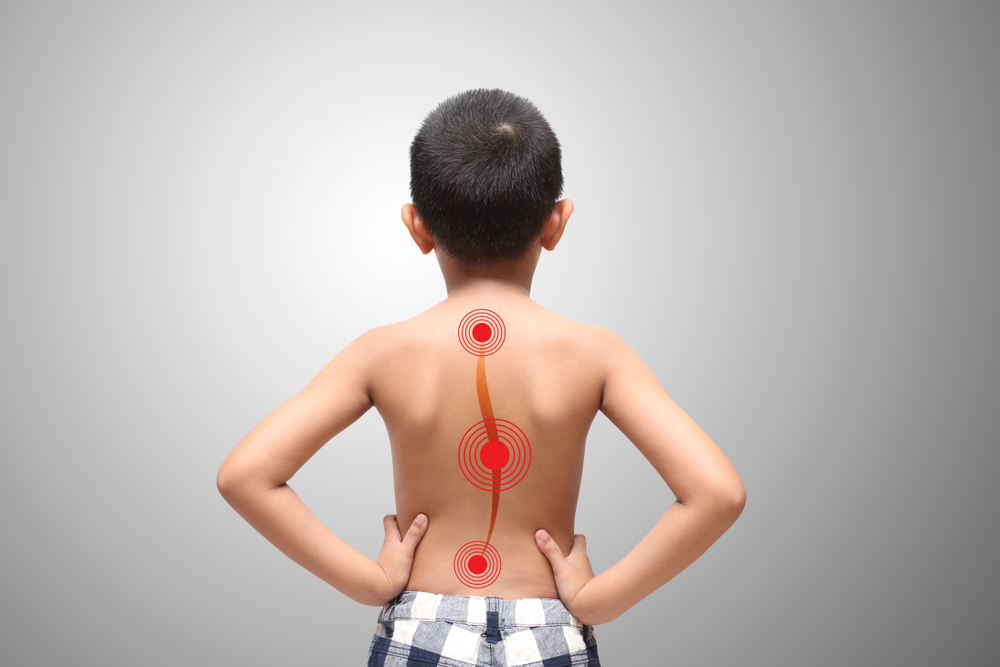
Spinal problems should not be ignored. How to do the test at home?

Spinal problems should not be ignored. How to do the test at home?

Written by : Chiropractor, Dr. Wan Man Ho

Children are prone to sitting problems, even scoliosis and kyphosis. Parents should find out their children’s problems early and make corrections. But how can parents tell when their   children have scoliosis and kyphosis problems?

For scoliosis, parents can try the Adam Test, a common test used by chiropractors, by      asking a child to bend forward with his hands on the ground and see if there is a problem  with the muscles on either side of the spine. If there is, it means that there is a high           probability of scoliosis.

In terms of kyphosis, it means looking from the side, the head is in front of the body, as if  the neck is stretched out, or the head is bowed for a long time and the shoulders are bent    forward. Most children in Hong Kong have a functional condition, and often, as long as they are reminded to sit up straight, they will be able to sit up straight and stop having a        kyphosis.

To improve the kyphosis, the most important thing is to open both shoulders, use the         strength of the waist to lift the chest, and bring the chin back near the head. This is the      most correct sitting posture and will improve the kyphosis.

Spine problems are related to the foot?

Some children have flat feet, resulting in a bit of in-toeing or out-toeing. The shape of the  foot will slowly affect the pelvis and create some highs and lows.

If a child often bumps his knees when learning to walk or even trips over himself after a    few steps, this may be a case of in-toeing or even an imbalance of the feet.

If your child has any of these problems, you should take him or her to a professional, such as a chiropractor, physiotherapist, or even a podiatrist, to get checked out. 

“Will my son be too thin if he doesn’t eat much?”

“Will my son be too thin if he doesn’t eat much?”

Written By: Founder of Kat-Spirit Nutrition Centre 

             Senior Dietitian Ng Yiu Fun


Many parents will bring their children to see me and say, “Is my son too thin? or “His bones are very obvious” or “Look, his ribs are visible, and his arms are still very small! In fact, many parents feel that their children are thin, but in fact, are these cases really thin?


In fact, whether it is thin or not, we have to look at the growth chart. If the child is below the growth line, he or she is considered thin. If the child is thin, there is no need to worry too much about health problems. Some parents may say, “No! His classmate next door eats a whole bowl of rice at every meal and eats a lot of meat, but compared to my son, who only eats a few bites of rice at every meal, he really eats too little! I have to find a way to catch up with the next classmate’s meal, so that he can have enough nutrition!

Many parents have a comparative mentality, and I believe that everyone’s needs are actually different. Some children may be really taller, but some children may be genetically influenced, relatively shorter and smaller-boned, so their needs are certainly not the same and their parents don’t need to worry too much.


I believe one thing we can do is to keep a happy mood when we eat at home, not to see if he eats every bite of rice, whether he “contains rice” or eats the whole bowl of rice, because constantly forcing him will only add pressure to the child when he eats. If we want him to eat a little more when he eats, it is actually very simple, just prepare a smaller portion of rice in the bowl, let him finish it, and then let him add more rice, so that he has a sense of success, but also help him increase his appetite.

In addition, the meal should not be too monotonous. Some parents say they have cooked their children’s favorite foods to suit their tastes in the hope that they will eat more, but unfortunately the results are not very good. Even if it’s a favorite food, it’s boring and tiresome, so they don’t eat it, which has the opposite effect. Therefore, parents should think of more colorful or different tasting dishes to make their children feel new and interesting, so that they will not feel bored and eat less.


Letting go and letting your child become an independent person

Letting go and letting your child become an independent person

Written by: Founder & Volunteer Director of Good Love Passion 

          Lam Ho Pui Yee

From childhood to adulthood, independence does not happen overnight. From the cradle to society, this journey is made up of countless small steps, and every small step in a child’s development is an opportunity for parents to learn to let go. 

Because we can’t be with our children all our lives and take care of them until they grow old, we as parents should know how to let go in a timely manner. The purpose of letting go is to help your child grow and become an independent person who can take responsibility for himself. This kind of love has deep meaning.

How to let go

1. love and discipline go hand in hand

Many parents want to be friends with their children, but respect is not an indulgence. In my opinion, being a friend to your child means that you want to share and communicate more about each other’s inner worlds, but not in respectful way, children still need the guidance of their parents. Instead of worrying about how to be your child’s friend, you should think and learn how to be your child’s coach and spiritual support. Therefore, listening to children and observing their behavior is the first step in teaching children self-regulation. By learning to listen to their children, parents will be able to understand their children’s potential, interests and passions, and give them the help and support they need to let go.

Give children the opportunity to deal with things and learn from their mistakes


Many parents seem to forget that a crying baby eventually learns to sleep without being held, or the joy and emotion of seeing a The ecstasy and emotion of seeing a baby take its first steps without the support of someone. When a child faces conflict, problems or mistakes, parents should not rush to advocate, step in or make amends. Never deprive your child of the opportunity to learn from mistakes and failures, because children learn the ability to advocate for themselves and solve problems, and to take responsibility for the consequences of their choices or actions. In the process of letting go, you allow your child to try mistakes and accept failure.

2. Delay in meeting the needs of the child


We need to let go of the myth that parents don’t have to meet what their children want. In setting boundaries, it is important to delay gratification. We need to distinguish between our child’s “wants” and “needs. When a child asks for something, don’t just give him what he wants. You can wait until his birthday to give him a gift or encourage him to save up to buy it. Many parents in the West encourage their children to help their neighbors hoe their lawns to earn pocket money to buy things they want, because they will appreciate the things they have worked hard for through their own efforts.


In addition to helping children grow and feel responsible for their own lives, there is a higher value in letting go, which is to turn small love into big love. Parents need to learn to let go and bless their children to pursue their lives. When you start to let go, you will find that there is infinite space in life.


Keep sneezing. How to improve allergic rhinitis?

Keep sneezing. How to improve allergic rhinitis?


Written by : Dr Chiu Cheung Shing

As soon as the season changes, both children and adults are susceptible to allergic rhinitis problems. For example, children may have difficulty in breathing due to allergic rhinitis, feel stuffy nose that affects their sleep quality, and have to wipe their noses all day long, and if the situation is serious, they may even suffer from sleep apnoea. 


Allergic rhinitis can be caused by both congenital and acquired factors.  Although it is difficult to cure allergic rhinitis due to congenital origin, if the acquired factors can be properly controlled, then the chance of children having the disease will be greatly reduced.


How to prevent allergic rhinitis caused by acquired factors?

Allergic rhinitis caused by acquired factors mainly include the following factors.

  1. allergens at home 
  2. outdoor allergens 
  3. some infectious diseases


As for the home, the more dust accumulated, the more likely to induce allergic rhinitis symptoms, so parents should be not only more frequent cleaning the bed for children, but also take away some of the stuffed animals and toys, and bed sheets, quilts and pillows and other things that are easy to hide dust, you need to wash with hot water at about 60 degrees, once every 4 days to clean the best.

If the outdoor environment is dusty, parents may need to close some of the windows to keep the air flowing and to reduce dust at the same time. It is also important to reduce the chance of infection, as once children have cross-infected each other at school, any virus can also worsen allergic rhinitis


In addition to reducing exposure to allergens and infections, we can also prevent allergic rhinitis in our daily life by sleeping and waking up early, doing the right amount of exercise and eating a proper diet, which will help a lot in preventing allergic rhinitis.


Is there a chance that allergic rhinitis will not recur?

Treatment of allergic rhinitis depends on how much the condition affects the child. If the effect is mild, home care or environmental control is sufficient. However, if the condition is more severe and causes frequent discomfort, oral medication and, if necessary, aerosol nasal spray may be required to reduce the discomfort.


If all environmental factors are controlled and treated with medication, in most cases, allergic rhinitis can be successfully controlled and may not recur.

Is there a problem with children sleeping on their backs?

Is there a problem with children sleeping on their backs?

Written by: Dr. Fung Wai Ching, Family Dynamics Volunteer Consultant


Every night when watching children sleep, there are always different strange sleeping 

positions, but when the child sleeps with the body down, parents will inevitably feel 

worried. A parent asked me about her 4-year-old child’s habit of sleeping with his body bent over, worrying about the adverse effects on the child’s health. This time  I will

explore the problem of children’s sleeping posture to all parents!


Infants should be avoided to sleep on their backs


According to medical research, sleeping on top of the body increases the risk of sudden infant death (Sudden Infant Death Syndrome (SIDS)). There is still no definite 

conclusion on how sleeping on top causes sudden infant death, but the medical

profession now generally recommends that infants under the age of 1 should avoid

sleeping on top to reduce the chance of SIDS.

Older children can adopt different sleeping positions


For older children, if they are in good health with no chronic illness, as long as they 

sleep peacefully, breathe well, have no abnormal breathing sounds, and wake up 

refreshed and energetic in the morning, there is no big difference in which sleeping 

position to adopt, as long as the mouth and nose are not blocked. In addition, in reality, the human sleep industry from time to time to change positions, excessive regulation of children’s sleeping position, both impractical and unnecessary.

Changing Sleeping Positions for Different Situations


For some individual cases, it may be beneficial to adopt a specific sleeping position. 

For example, children with upper respiratory tract obstruction (such as tonsillar 

hypertrophy) often snore when they sleep because of the obstruction of the upper

respiratory tract, and lying on their backs will cause the tongue to move backwards, 

further obstructing the narrow airway. I suggest that children sleep on their sides so 

that their tongues do not move backwards and their airways are more open. In addition, for young children with gastroesophageal reflux, sleeping on the right side may 

increase the chance of backflow of food and digestive juices in the stomach, so

sleeping on the back or to the left side is preferable.

Become a secure attachment for your child.Parent-child interaction is especially important

Become a secure attachment for your child.Parent-child interaction is especially important

Written By: Ms. Lui Shuk Jing, Family Dynamics Personal, Marriage and Family

 Therapist


There is a Chinese saying “the age of three determines 80” and the West has 

another saying “The future is now”.It is clear that both Chinese and foreign parents have relevant parenting experience and believe that the early years are the golden age 

for shaping the healthy growth of their children. Many parents understand that they are the key influencers of their children’s growth, and that their children will learn by 

example, so they have to set an example and start to discipline them at a young age. 

I believe that parents focus on disciplining their children’s behavior, but recent studies in medicine, science, psychology, and early childhood development all point to the 

interaction and relationship between parents and children as the foundation for their 

children’s development.

Attachment Theory research clearly shows that as early as 0-18 months of age, a 

parent or primary caregiver forms a lifelong relationship pattern with the child that will be passed on for the rest of the child’s life. Once a secure attachment relationship is 

established, it is like a secure base that can be effective in dealing with future turbulent situations and in building the ability to have a successful family relationship. 

Conversely, once an insecure relationship pattern is established, it can have a negative 

impact on an infant’s future growth, emotional processing, and family relationships.

Secure Attachment 


The key to establishing a secure attachment pattern is for parents to establish a secure 

attachment when their child is 0-18 months old. Parents can build secure attachments 

based on the following suggestions


  • Be close to your child often, especially when they need it, such as when they cry 

and see their parents comforting them so that they know you are always there for 

them.


  • Invest emotionally in the parent-child relationship so that your child knows that

you enjoy spending time with them and are interested in them, rather than being

preoccupied with your own work. So parents need to play with their children from time to time to increase parent-child interaction and communication.


    • Parents are sensitive to their children’s emotional needs because children need you not only to meet their physical needs but also to care about their emotions and 

    help them express and respond to them, especially negative emotions. When your child is dancing or smiling, you will help them say, “My baby is so happy! I’m so excited!” When your child is upset or crying, you will pick them up and offer 

    protection and comfort. As they grow older, they will have more complex 

    emotions, such as worry, fear, anger, frustration, and shame, and parents need to 

    encourage and help their children express them, even though their negative 

    emotions may have something to do with them.


    Insecure Attachment


    I have handled many cases in which the children are smart and well-behaved and have 

    excellent academic performance, but they are very disturbed emotionally. Their parents think they are leading by example, loving their children and working hard, but they do not 

    understand how their children can have emotional problems. If they look closely 

    at the “attachment pattern” between themselves and their children to see if they are always 

    close to their children, if they are emotionally involved, and if they can meet their children’s

     emotional needs, it will be easy to find the core of the problem and help parents rebuild a 

    secure attachment relationship with their children so that they can rely on them and build a 

    foundation for growth.